Here I Write
I can do no other.

My conscience is held captive by the Word of God, the good of my neighbor, and the Oxford comma.

“I armed her against the censure of the world, showed her that books were sweet, unreproaching companions to the miserable, and that if they could not bring us to enjoy life, they would at least teach us to endure it.”
— The Vicar of Wakefield by Oliver Goldsmith
Upcoming events for you and me!
Author Fair (TOMORROW) – I am thrilled to be participating in the Champaign Public Library’s local author fair this Saturday, January 31 from 2-5 PM in Champaign, Illinois. Come and see me! This event is open to the public, and I want to meet you and sign your books. I’ll also have books on-hand for purchasing if you don’t already own copies.
Hymn Writing Workshop and Hymn Festival – Please, join me, Dr. Lisa Clark, and the Rev. Dr. Jon Vieker at the Prevallet Hymn Writing Workshop on Saturday, February 28 at Concordia Seminary, St. Louis, followed by a hymn festival featuring our original hymns the very next afternoon on Sunday, March 1, 4:00 PM at the Chapel of St. Timothy & St. Titus on the seminary campus. The hymn festival is open to the public, but those wishing to attend the hymn writing workshop are required to register.
Pew Sisters Retreat – Calling all pew sisters! Do you live in central Illinois (or at least can get there?) Join me at Camp CILCA in Cantrall, Illinois for a women’s retreat March 6-7. This event is open to the public, but registration is required. You may register here.
Win signed copies of my books!
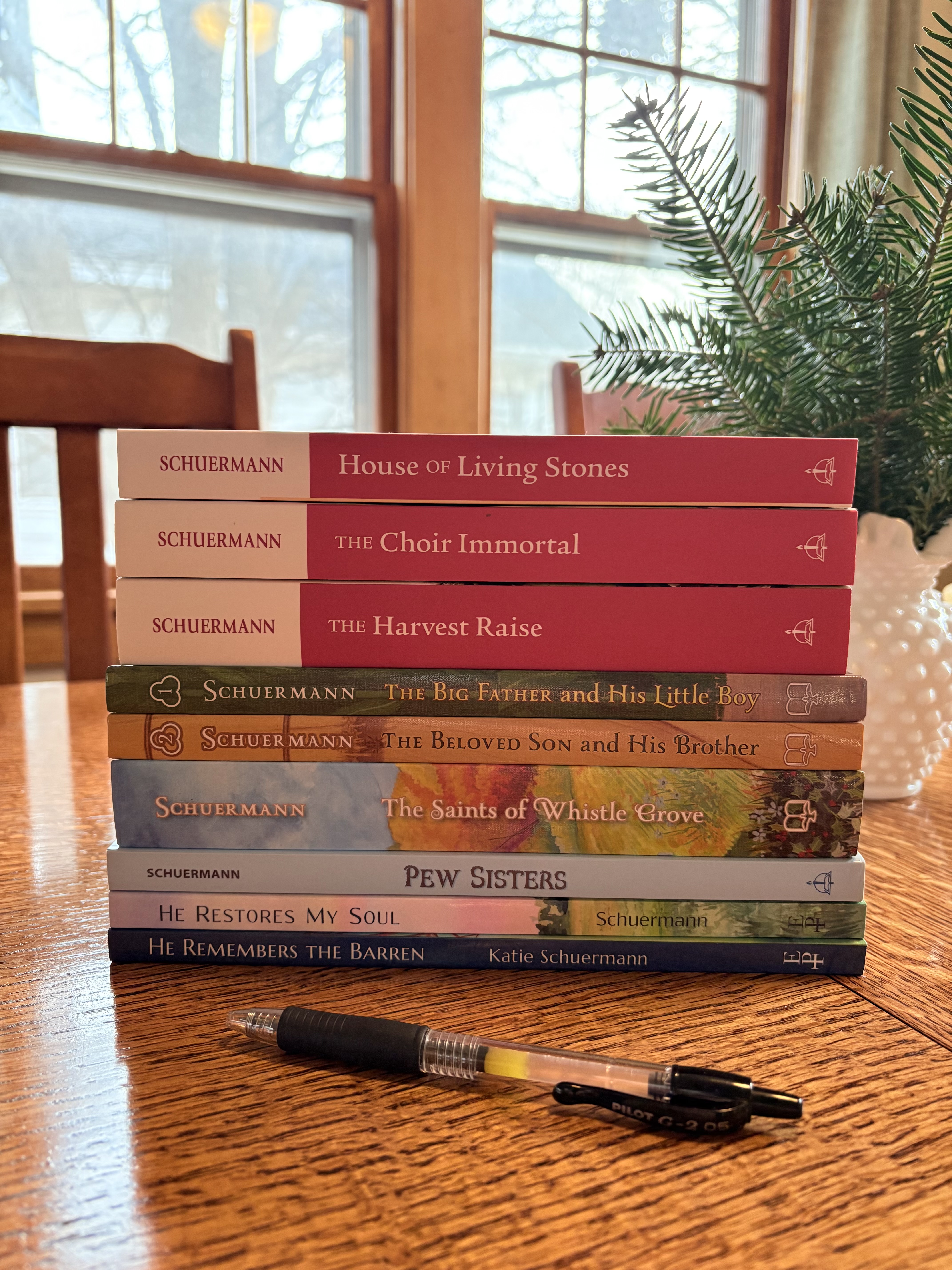
Would you like to own a signed copy of one or more of my books? Then get thee to Wittenberg Academy’s online auction. Bidding is now live and closes February 15 at 7:00 PM Central. Every penny benefits the wonderful work Wittenberg Academy is doing to educate the next generation of scholars.
Favorite Reads of 2025
Some years, it feels like I write more words than I read. This is never true.
A more accurate account is that, as an author, even the act of reading becomes an exercise in creative writing, for I can no longer not notice the decisions the authors are making on the pages before me.
Thankfully, I enjoyed many “writing exercises” this year, for I read some really good books. Here are my favorites:
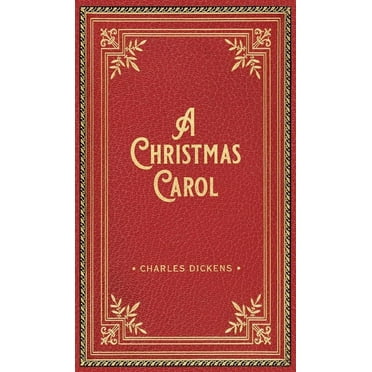
A Christmas Carol by Charles Dickens
The last three years, I have been applying my authorial hand to the craft of layering Biblical allusions in Books 1-3 of The Creed series, and so I was stunned with joyful delight to behold Dickens’ powerfully beautiful allusion to the Syrophoenician woman in the graveyard scene with the Spirit of Christmas Past. How Scrooge begged! How he argued against condemnation with a tenacious hope! How he defended his faith in the inherent goodness of the ghostly exercise, clinging to that “kind hand”—Nicely done, Mr. Dickens!—trusting in the mercy of the horrid, hooded judge.
Scrooge (and the Syrophoenician woman) are correct. God is merciful.
Commence my weeping, and God bless us, everyone.
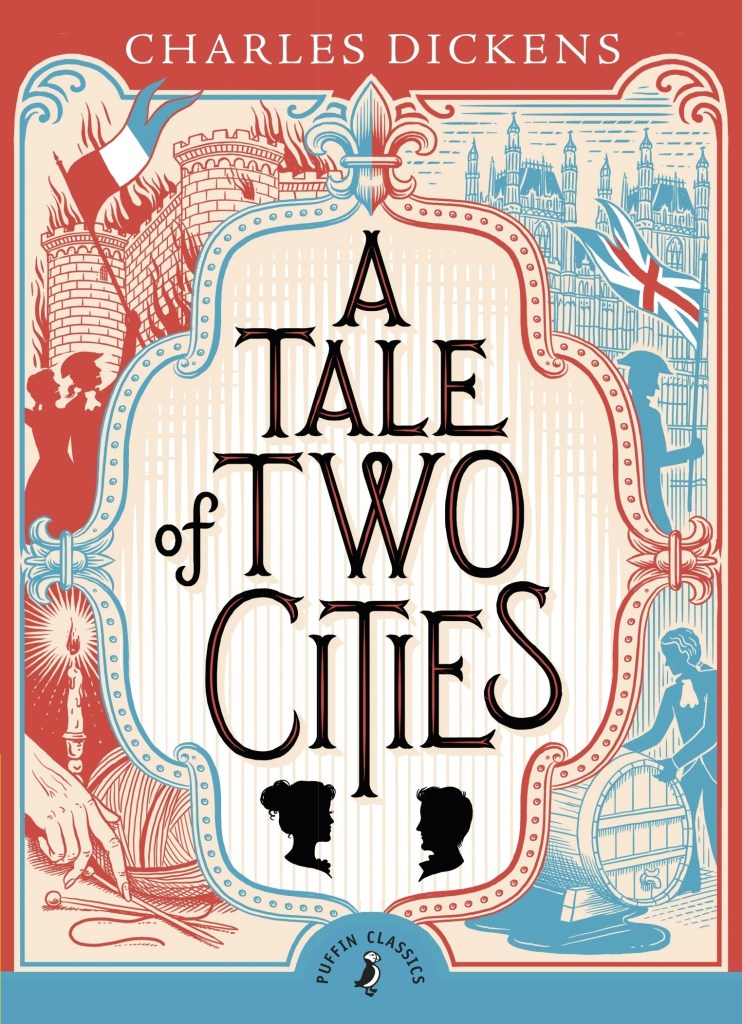
A Tale of Two Cities by Charles Dickens
I could go on and on about Mr. Dickens’ masterfully developed and executed storyline in this book, his exquisite writing, the delicate balance he achieved between pathos and humor, his glorious ending of endings, and so on. I could also go on and on about the role this story alone has played in my own education and career. But, instead, what I think I’d prefer to scratch out here on Goodreads is my gratitude at Mr. Dickens’ having composed a story that so clearly displays humanity’s grave error in demanding that any future generation pay for a past generation’s sins. There is a diabolical cycle to human vengeance, one that requires everyone’s head in the end, and this is a lesson we are still trying to master today.
And now to express my unpopular opinion: I wish Mr. Dickens had had a better editor, for surely then he would have scrapped his opening–however famous now–for its being obtuse, completely out of meter with the rest of his story, and contributing nothing to the story itself. It was the best of endings, it was the worst (less harsh: most out-of-place) of openings.
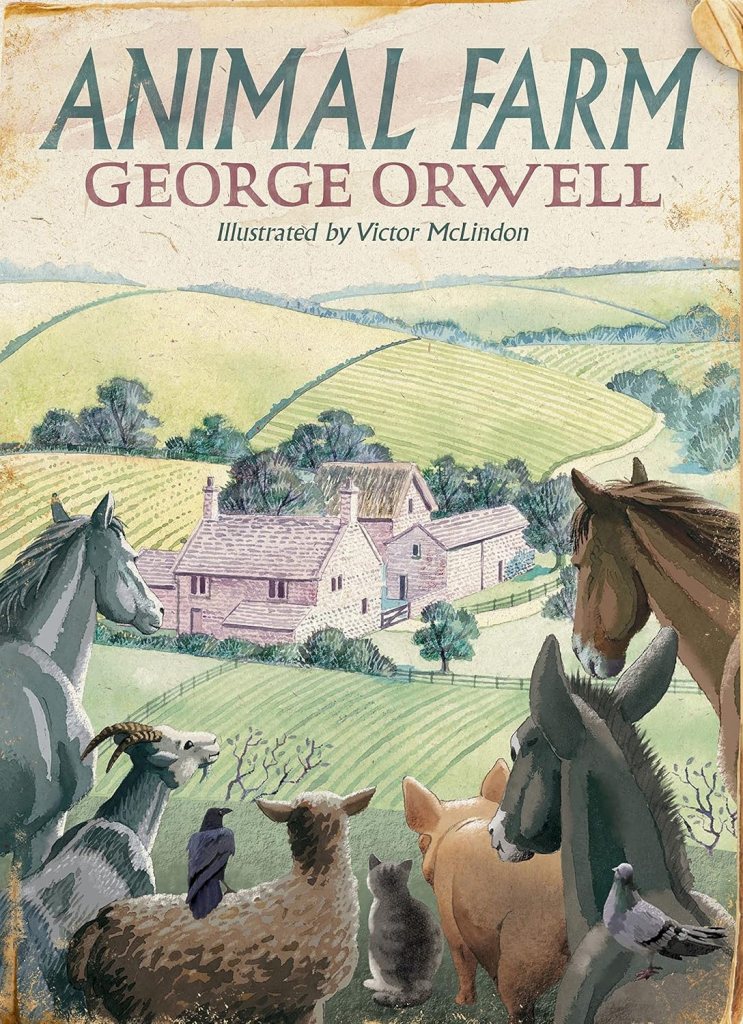
Animal Farm by George Orwell
I am about 35 years late in reading Animal Farm according to modern educational standards, but I am thankful I read this for the first time as an adult. Here’s what I’ve concluded:
1. This is an important book.
2. What Orwell accomplishes as a story-builder and -teller is remarkable. His stories make me think and feel for days.
3. Long expositions still fail to hold my attention as a reader.
4. Totalitarianism is horrifying.
5. We’re missing out on something in life by no longer caring for and being cared for by horses.
6. Chickens are dramatic.
7. Evolutionary theory looks even more ridiculous on a pig.
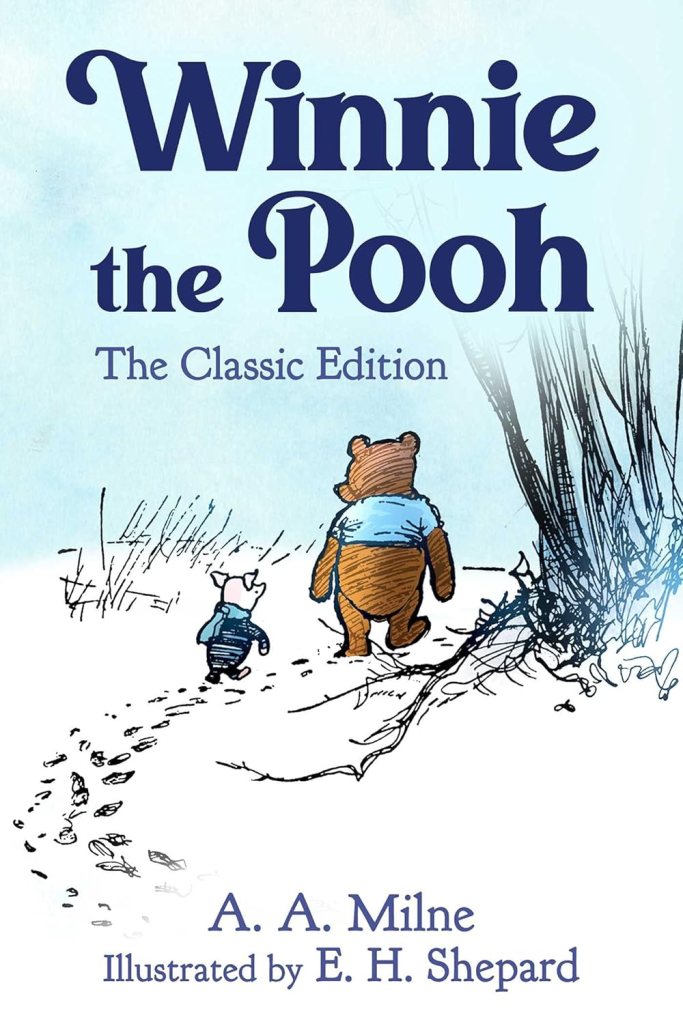
Winnie the Pooh by A. A. Milne
I am a child of the 80s, and so I wonder what it would be like to read this book without having already met Pooh and his friends via decades of Disney-fied programming. Would Pooh’s voice sound the same in my head? Because I could not read this book without hearing Sterling Holloway’s bumbling, winsome tenor bumping along from passage to passage. And I was jarred out of the story meter every time I encountered one of Shepard’s charming, folk-ish illustrations, for brightly animated scenes were already playing in my head.
Interestingly, the written Piglet is even fussier than the animated Piglet, and the animated Eeyore is more charming than the written Eeyore.
I am bit mixed up after this read, I think. I would like to have had Milne introduce his characters to me on his own.
One thing that doesn’t have me mixed up: Milne’s love for and adoration of his son drips from every page, and the sweetness of that honey stuck me to the story every time.
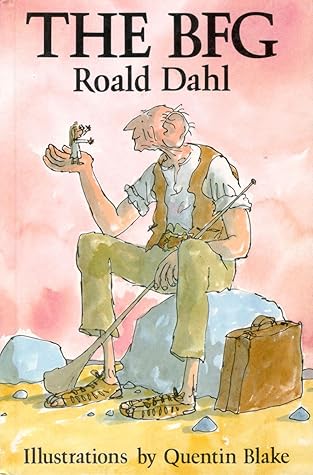
The BFG by Roald Dahl
About a third of the way through this book, I had the thought that this would make a better short story than a chapter book. Dahl’s comedic bit was losing its color from being rewashed too many times through too many conversations, and a strange moralizing kept blanching the witty wordplay like too much bleach. However, by the last third of the book, Dahl hung his moralizing out to dry and began telling us a story that could charm the socks off even the Queen of England. The scene with the palace butler alone makes this read worth it.
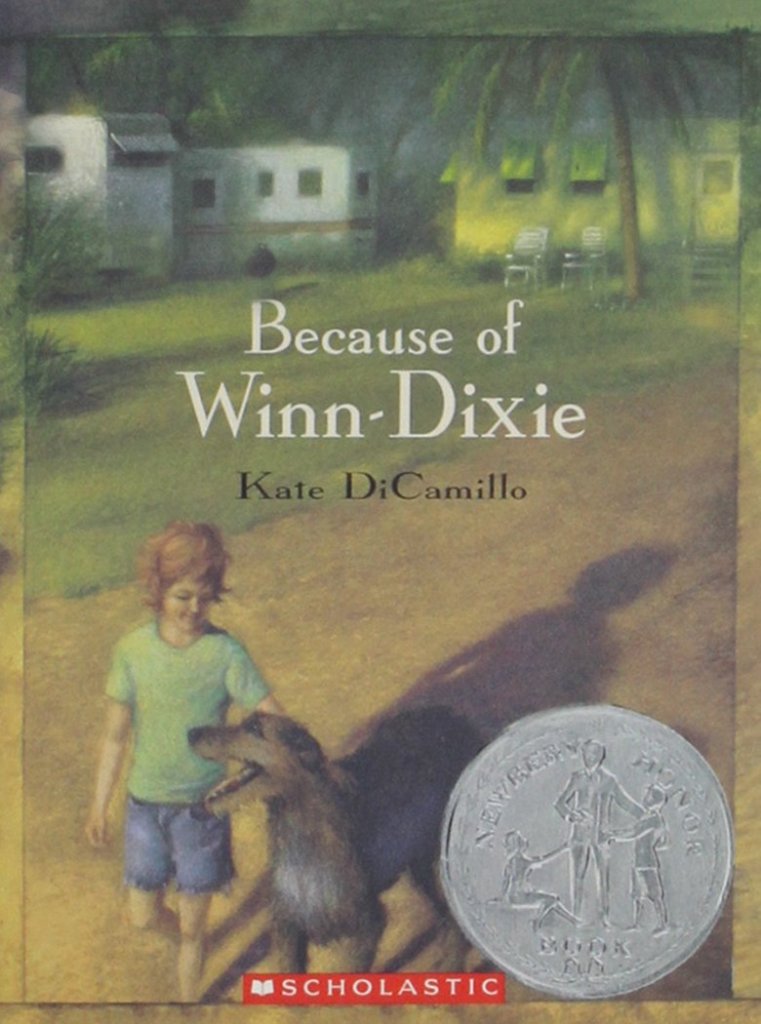
Because of Winn-Dixie by Kate DiCamillo
Great care went into the telling of this story. Themes of abandonment and loss permeate the plot but never beyond the reach of hope and mercy’s arms. I would characterize this book as a trope on what we Lutherans like to call our First Article gifts, even the gift of a stray dog.
The Abolition of Man by C. S. Lewis
This book makes me smarter, and for that reason alone, I should make a habit of rereading it every year.
I am thankful that I read Lewis’ That Hideous Strength (the author’s self-proclaimed fictional variation of this book) a couple of years ago. It helped me better follow Lewis’ more intricate philosophical defenses of the Tao in this version.
I finished this book feeling immensely thankful for the courage of every faithful man-with-a-chest in academia who spends his days defending the sanctity of human life against the Conditioners who would make slaves of men.
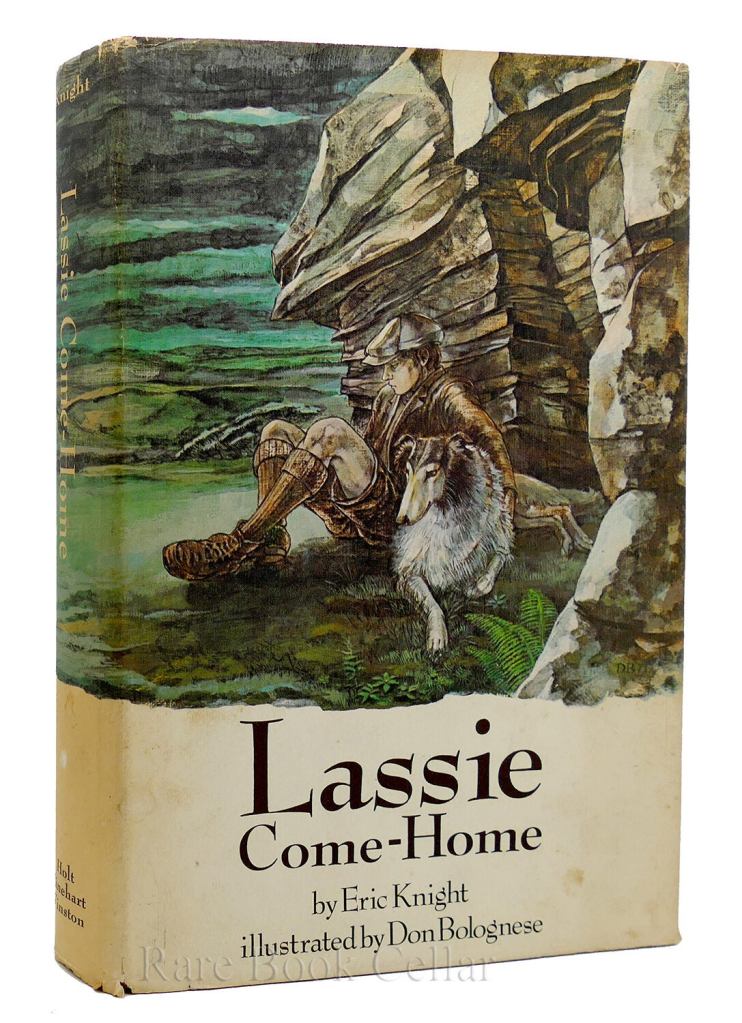
Lassie Come-Home by Eric Knight
This story reads like a pet-pilgrim’s progress. Full of warmth, it does not shy from what is hard in life but demonstrates to the reader how trials can be faced with courage, dignity, and fidelity to what is good. I especially appreciate that, when the author enters into Lassie’s point of view, he does not personify the dog. He simply and elegantly describes how a dog’s instincts are distinct from a human’s, and in doing so, he honors both creatures.
One quibble: I think it unwise to leave the protagonist (and the young reader) thinking that it is luck, not virtue, that brings harmony to a home. Such a resolution dishonors the self-sacrifices made by every character striving to love others in good times and in bad.
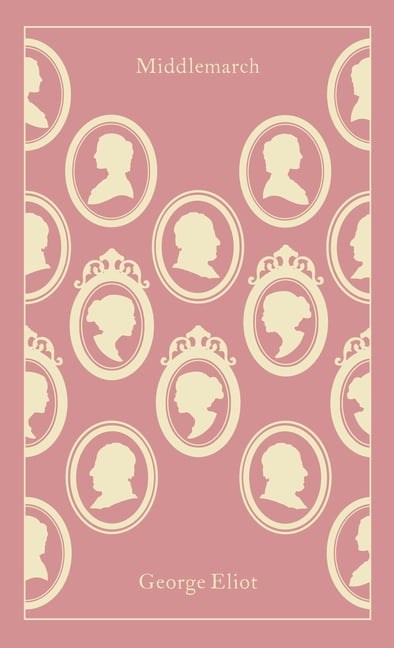
Middlemarch by George Eliot
I like it when a book’s closing sentence also serves as the thesis of the story. It trims the package with an attractive bow, and I close the back cover feeling like the story I just read must have been intended as a gift for me to open. Why else bother with the wrapping?
And Middlemarch is a gift worthy of opening. Plot-wise, it is a fictional trope (of sorts) on Proverbs 10, and Eliot’s frighteningly accurate insights into the heart and soul of every saint-sinner walking across the page unveil the best and worst in all of us.
Still, there are many sentences stuffed inside this bulging, 838-page story gift-wrapped by Eliot that feel a bit more like packing peanuts than treasure. It is Eliot’s tendency toward a more tedious, overly-meditative narration in this book, I think. Some passages ramble and circle back when they could stride forward and lead. I also missed the warmth, humor, and best-construction that permeate Adam Bede.
But — Wow! — did this story uncover my own sins of pride, obstinacy, and discontent. And that made every fussy paragraph worth the time and effort.
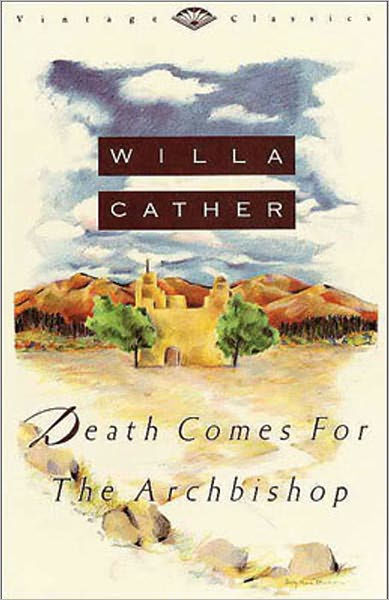
Death Comes for the Archbishop by Willa Cather
This is my fourth Cather novel, and she writes as convincingly and tenderly about the Southwest as she does about Nebraska. She understands that I, the reader, am completely dependent upon her words alone to see the scope of a mesa, to understand the organization of a pueblo, and to diagnose the temperament of a people and culture unknown to me by sight or experience.
This particular excursion with Cather took me alongside a gentle, mule-riding Roman Catholic bishop of French origin, and I liked the bishop very much, even as my Christian heart broke again and again, page after page, to see his parishioners’ suffering met with only man-made beads and trinkets and prayers to Mary for their consolation.
Oh, to have come across the name of my Lord Jesus on the page or on the bishop’s lips or in his prayers or at the bedside of the dying! But this missionary would have everyone under his care petition Mary (May she rest in peace!) for help and comfort rather than her resurrected Son, the Savior of the world, who said, “Come unto me all you who are weary and heavy laden, and I will give you rest.”
In life, Mary said of her Son, “Do whatever He tells you.” I found myself wishing the bishop had taken Mary’s advice more to heart.
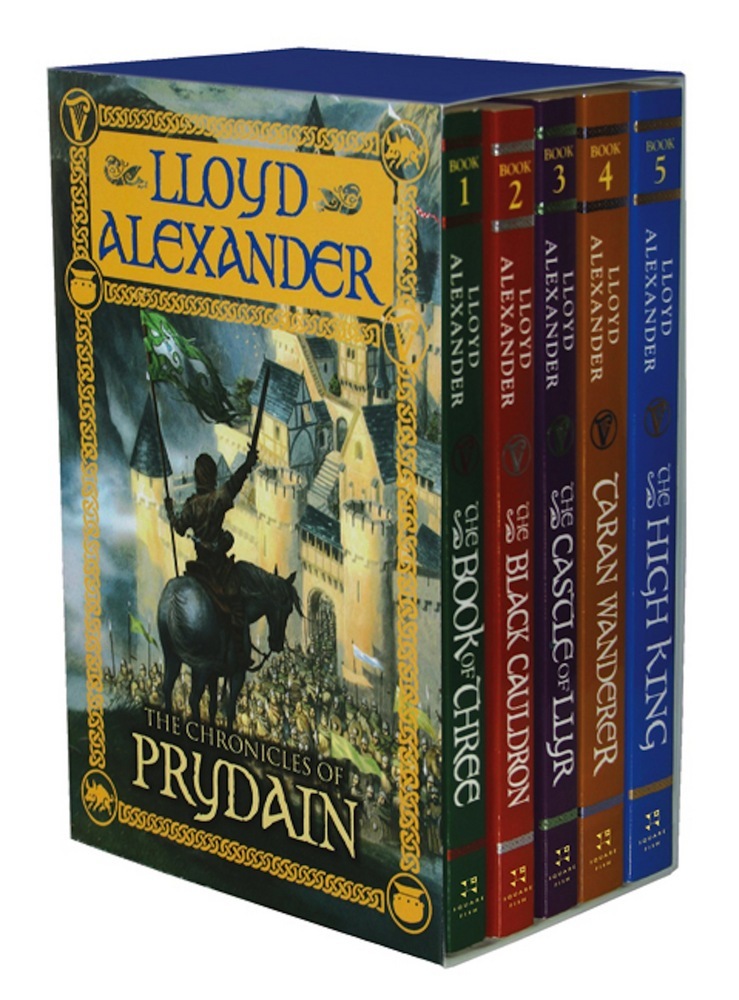
The Chronicles of Prydain by Lloyd Alexander
The Book of Three (Book 1) – This was a wholesome read, one well-suited for my nightstand. While it wasn’t terribly rich in plot, it proved to be a fast, familiar friend. Many Tolkien-esque characters and tropes appeared on the pages, and always right on cue. I did find myself wearied out in the end from following the chapter-by-chapter episodic adventures of a boy whose character grew very little in comparison with the grandness of his experiences, but I still smile at the thought of his oracular pig.
The Black Cauldron (Book 2) – This second book in the series proved more tightly crafted than the first from the very start, and I appreciated the allegorical nod to Christianity’s tenet “greater love hath no man” in the execution of its plot. I also rejoiced to find forgiveness on the lips of the main character.
Otherwise, the Tolkien-esque characters introduced in Book 1 continued in their prescribed roles, and while they did not exactly experience character development in this story, they did experience some caricature development. The girl in particular was given a new speech pattern (“That’s like…That’s worse than…”), and while it is a bit jarring to encounter at first, it did fit in with the author’s established meter of giving every main character a formulaic response to every situation.
The Castle of Llyr (Book 3) – I liked this book in the series very much. The author hit his stride in this story, successfully departing a bit from Tolkien’s influence to create something new and interesting both in the world he has built, the characters he is beginning to develop, and the powerful contrasts between light and dark (Hello, Good Friday themes!) he painted on the page.
Taran Wanderer (Book 4) – In my humble opinion, this story had a mournful depth that elevated it above its antecedents, and not because sorrow always makes for a better story. Simply, the addition of spiritual toiling to Taran’s typical physical questing led to true character growth–true maturity–in the boy. Witnessing an ambitious boy growing into a contented man makes for a terribly satisfying read.
On a personal note, since beginning this series, I have learned that several men I deeply admire read this series as boys and now profess its being foundational to their upbringing. Taran’s story arc inspired them to want to be courageous men of fidelity. This series is dear to them, and those men are dear to me. So, thank you, Mr. Alexander, for raising a world of wonderful men through your stories.
I am still making my way through the fifth and final book in this series.

Katie Schuermann is a baptized child of God, pastor’s wife, and author of The Saints of Whistle Grove; The Creed series, including The Big Father and His Little Boy and The Beloved Son and His Brother; the acclaimed Anthems of Zion fiction series, House of Living Stones, The Choir Immortal, and The Harvest Raise; and nonfiction favorites such as He Remembers the Barren, He Restores My Soul, and Pew Sisters. When not writing, Katie can be found making music, reading, cooking, gardening, holding babies, or trying to climb the nearest tree.
+ SOLI DEO GLORIA +
Not yet subscribed to Here I Write?

Here I Write, Issue 39
Copyright © 2026 Katie Schuermann, All rights reserved.
 Katie Schuermann